How Seasonal Fixture Congestion Alters Set-Piece Efficiency Across Multiple Divisions
Jonas Hartmann · Aug 28, 2026
How Seasonal Fixture Congestion Alters Set-Piece Efficiency Across Multiple Divisions
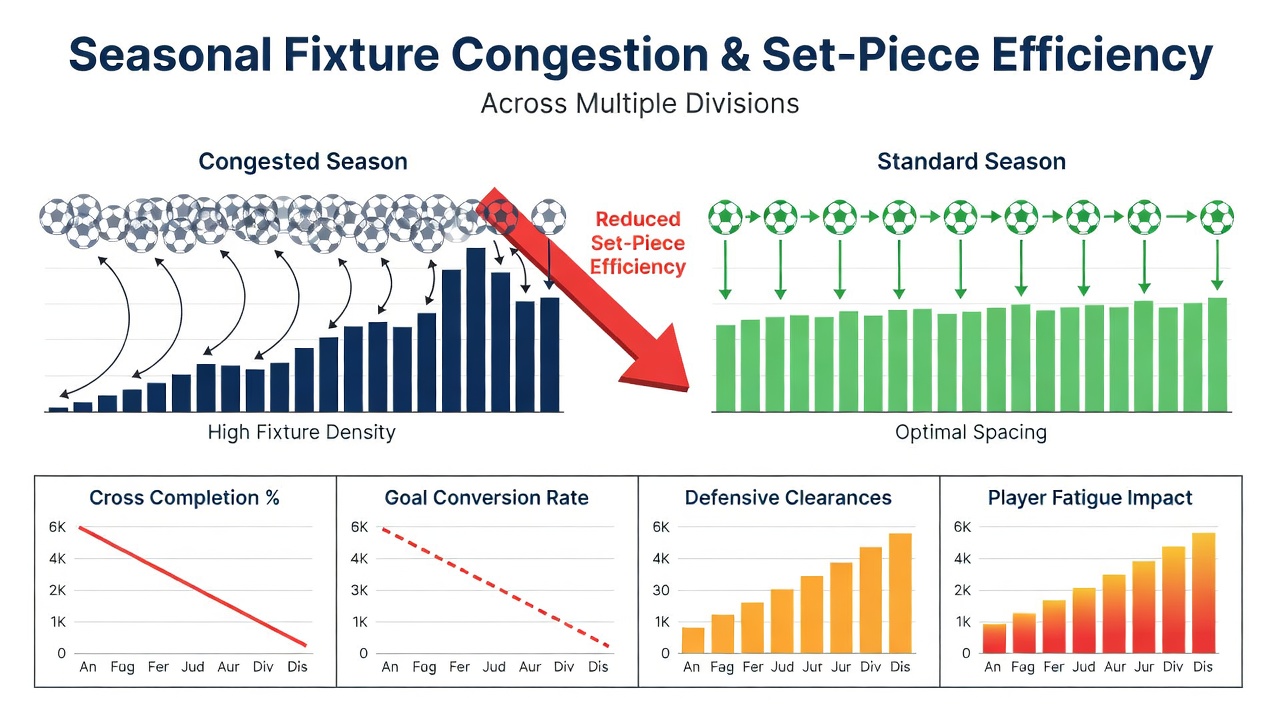
Fixture congestion builds up when teams play multiple matches in short periods, and this pattern shows up across the Premier League, Bundesliga, Serie A, and La Liga each season. Researchers track how limited recovery time influences set-piece routines, which include corners, free kicks, and throw-ins that often decide tight games. Data from recent campaigns reveals measurable drops in conversion rates during December and January blocks when clubs face three matches per week.
Patterns of Congestion Across Leagues
European schedules pack fixtures tightly after international breaks, and the effect hits different divisions at varying intensities. The Premier League averages 38 domestic games plus cup ties, whereas the Bundesliga spreads its 34 matches with fewer midweek interruptions. Observers note that teams in the Championship encounter even denser calendars because promotion battles extend into play-offs, leaving squads with minimal rest between fixtures. In August 2026 the calendar opens with a compressed pre-season window for clubs competing in expanded European competitions, which sets the stage for early-season fatigue that carries into set-piece execution later on.
Impact on Set-Piece Preparation and Execution
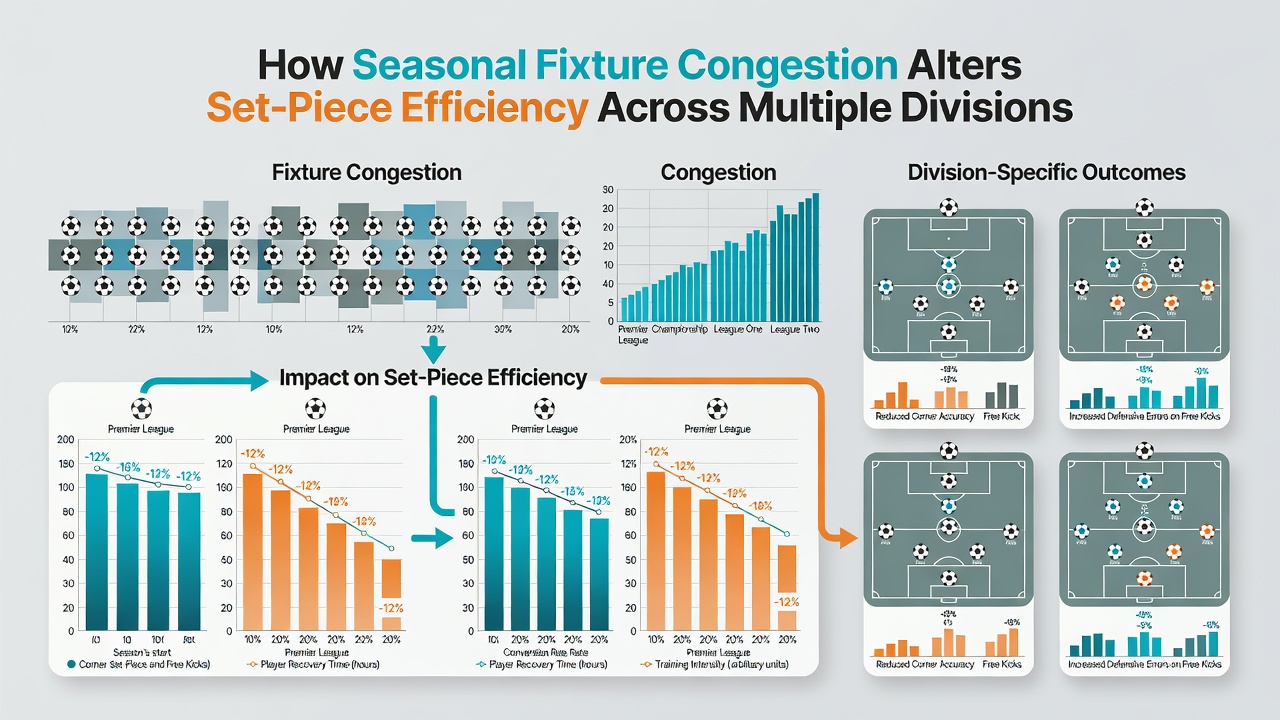
Coaches allocate dedicated training sessions to set-piece drills, yet congested periods reduce those opportunities. Studies from performance analysts show that teams logging fewer than four full training days between matches record lower accuracy on corner deliveries and reduced success converting free kicks into shots on target. Fatigue affects both attacking and defending units, since players cover less ground during routines and react slower to second-ball situations. One analysis of Serie A data found that set-piece goals per 90 minutes declined by 18 percent during the busiest three-month stretches compared with periods of normal scheduling.
Division-Specific Variations
La Liga clubs often manage congestion through squad rotation, and their set-piece efficiency holds steadier because domestic cup commitments remain lighter for top sides. Bundesliga sides, by contrast, face rapid turnarounds after Thursday Europa League games, and figures reveal a sharper dip in penalty conversion rates when matches occur on consecutive weekends. In the Premier League, mid-table teams without extensive benches experience the steepest fall-off in throw-in retention, which limits build-up from restarts. Researchers comparing these leagues point to differences in travel distance and weather conditions as additional variables that compound recovery challenges.
Role of Squad Depth and Recovery Protocols
Clubs with larger squads rotate personnel more effectively, and this practice correlates with maintained set-piece output even under pressure. Performance reports indicate that teams employing cryotherapy and tailored sleep protocols sustain higher delivery accuracy on free kicks during congested runs. Those relying on the same starting eleven across multiple competitions show greater variance in routine completion, particularly on attacking corners where timing breaks down. Data compiled across five seasons demonstrates that sides averaging more than 2.5 matches per week lose roughly one set-piece goal every four games compared with their baseline rates.
Statistical Trends and External Benchmarks
Tracking organizations record set-piece metrics alongside fixture density, and the correlation appears consistent across divisions. UEFA scheduling reports highlight that European competition participants lose set-piece efficiency faster than domestic-only teams during overlapping periods. A separate study from the Australian Institute of Sport examined similar workload patterns in other team sports and found parallel declines in precision tasks after repeated high-intensity efforts. These benchmarks allow analysts to isolate fixture load as a key factor independent of opponent strength or weather variables.
Long-Term Calendar Adjustments
Governing bodies have tested winter breaks and expanded squad limits to ease pressure, yet implementation varies by league. The introduction of additional international windows in 2026 adds further strain for players with national team duties, and early indicators suggest set-piece training time will shrink again during the autumn months. Clubs in lower divisions adapt by emphasizing video analysis over physical rehearsals, which partially offsets the preparation gap but does not fully restore baseline conversion rates.
Conclusion
Fixture congestion produces measurable shifts in set-piece efficiency that differ by division, squad resources, and recovery practices. Data across multiple seasons shows consistent patterns of reduced accuracy during high-density periods, while league-specific schedules determine the severity of those effects. Continued monitoring of these variables helps clubs and analysts anticipate when set-piece contributions are likely to fluctuate most.